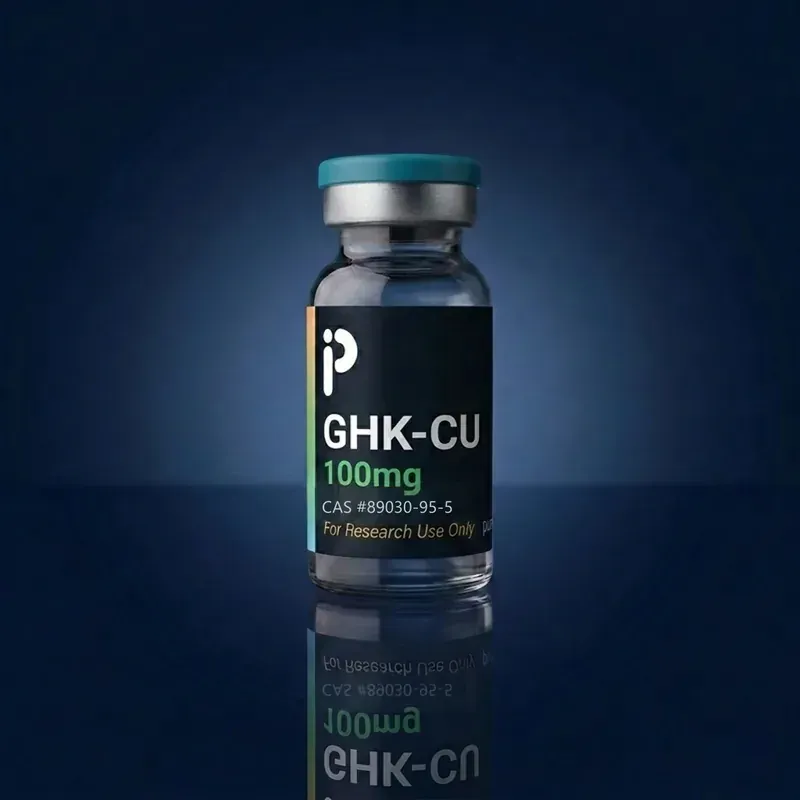
GHK-CU 100mg
GHK-Cu (glycyl-L-histidyl-L-lysine copper complex) is a naturally occurring copper-binding tripeptide found in human plasma, saliva, and urine. Plasma GHK levels decline from approximately 200 ng/mL at age 20 to 80 ng/mL by age 60. Originally identified by Dr. Loren Pickart in 1973 as a factor in human plasma that promoted hepatocyte function, GHK has since been shown to influence the expression of over 4,000 human genes, broadly resetting gene expression patterns toward an altered phenotypic profile in gene array studies. Supplied strictly for in-vitro research and laboratory use only. Not for human or animal use.
Strength
Select Option
2+ save 5% · 5+ save 10% · 10+ save 20%
- Free Priority shipping on US orders over $100
- Ships same day on orders before 2 PM MST
- Plain, secure packaging
- Reported measurements · lot GHK-20260828-01Bioviridian Inc. · COA8897: purity 99.68%; content 103.58 mg.
- Stock-solution arithmetic — GHK-Cu concentration calculator
Batch Tracking
Batch #
GHK-20260828-01
Tested
2026-09-08
Purity
99.68%
Method
RP-HPLC (214 nm)
Mechanism of Action
GHK-Cu chelates copper(II) ions with high affinity, delivering bioavailable copper to tissues where it is required for enzymatic activity (lysyl oxidase, superoxide dismutase, cytochrome c oxidase). The peptide activates tissue-repair cascades including collagen I/III synthesis, glycosaminoglycan accumulation, and decorin expression. Zhou et al. (2017) studied GHK and TGF-β1/Smad signaling in mice with bleomycin-induced lung injury.
Properties
CAS Number
89030-95-5
Molecular Formula
C₁₄H₂₂CuN₆O₄
Molecular Weight
401.91 Da
Sequence
Gly-His-Lys:Cu²⁺
Half-Life
Not established
Storage
Store lyophilized at -20°C protected from light. Reconstituted at 2-8°C, use within 7 days.
Shipping & Delivery
- Same-day dispatch on orders placed before 2 PM MST (Arizona — no daylight saving).
- US shipping from $5. Free Priority on orders $100+ (before discounts).
- Plain, unmarked packaging — no branding or product names on the outside.
- Ships to all 50 states, DC, Puerto Rico & the U.S. Virgin Islands; tracking emailed on every order.
Quality & Testing
- Independently tested by Bioviridian Inc. — identity by LC-MS/MS, purity by RP-HPLC (214 nm).
- Reported measurements on lot GHK-20260828-01:Bioviridian Inc. · COA8897: purity 99.68%; content 103.58 mg.
- USA-based; dispatched from Phoenix, Arizona.
- Supplied strictly for in-vitro laboratory research — not for human use.
Research Applications
References & Citations
(4)GHK Peptide Inhibits Bleomycin-Induced Pulmonary Fibrosis in Mice by Suppressing TGFβ1/Smad-Mediated Epithelial-to-Mesenchymal Transition
Zhou XM, Wang GL, Wang XB, et al.
GHK peptide as a natural modulator of multiple cellular pathways in skin regeneration
Pickart L, Vasquez-Soltero JM, Margolina A.
GHK-Cu may prevent oxidative stress in skin by regulating copper and modifying expression of numerous antioxidant genes
Pickart L, Vasquez-Soltero JM, Margolina A.
The tri-peptide GHK-Cu complex ameliorates lipopolysaccharide-induced acute lung injury in mice
Park JR, Lee H, Kim SI, Yang SR.
Other strengths
Research Use Only
This product is intended strictly for in-vitro research, educational, and laboratory use. Not for human consumption. The information provided is based on published research and does not constitute medical advice.