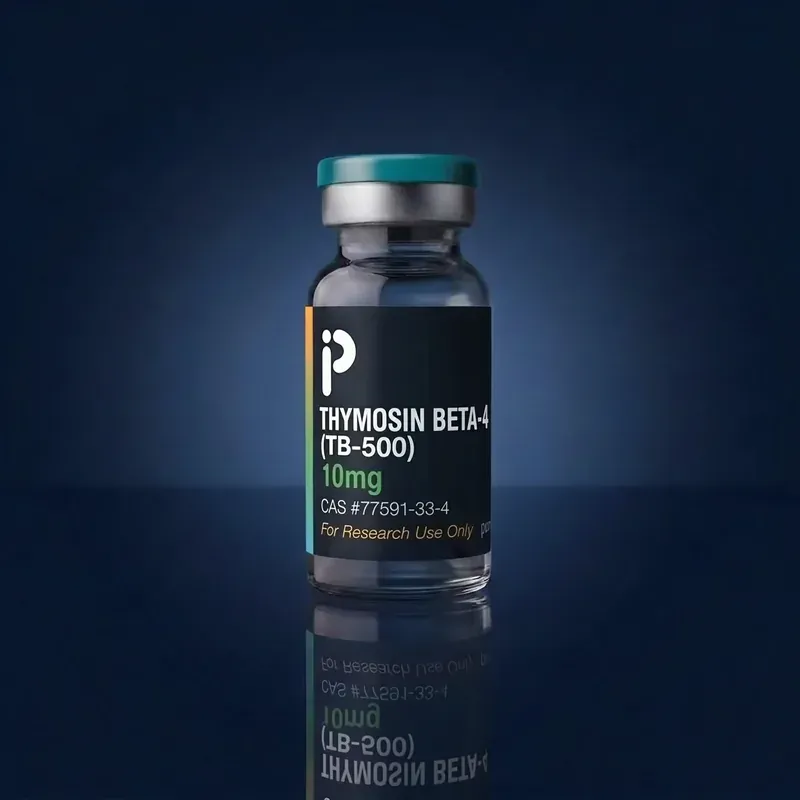
Thymosin Beta-4 (TB-500) 10mg
Thymosin beta-4 (Tβ4, timbetasin) is a 43-residue peptide, N-acetylated at Ser1 with a free C-terminal carboxyl. This listing is sold under the TB-500 name and is the full-length 43-residue peptide, not the seven-residue Ac-LKKTETQ fragment that the TB-500 designation can also refer to. This listing contains 10mg of lyophilized material. Supplied strictly for in-vitro research and laboratory use only. Not for human or animal use.
Select Option
2+ save 5% · 5+ save 10% · 10+ save 20%
- Free Priority shipping on US orders over $100
- Ships same day on orders before 2 PM MST
- Plain, secure packaging
- Certificates published per tested lot — see current coverage
Mechanism of Action
Hannappel (2007) reviews the beta-thymosins as the main intracellular G-actin-sequestering peptides. Hannappel (2010) reviews the post-translational modifications described for thymosin beta-4.
Properties
CAS Number
77591-33-4
Molecular Formula
C212H350N56O78S
Molecular Weight
4963.5 Da
Sequence
Ac-Ser-Asp-Lys-Pro-Asp-Met-Ala-Glu-Ile-Glu-Lys-Phe-Asp-Lys-Ser-Lys-Leu-Lys-Lys-Thr-Glu-Thr-Gln-Glu-Lys-Asn-Pro-Leu-Pro-Ser-Lys-Glu-Thr-Ile-Glu-Gln-Glu-Lys-Gln-Ala-Gly-Glu-Ser
Storage
Store lyophilized at -20°C. Reconstituted at 2-8°C, use within 14 days.
Shipping & Delivery
- Same-day dispatch on orders placed before 2 PM MST (Arizona — no daylight saving).
- US shipping from $5. Free Priority on orders $100+ (before discounts).
- Plain, unmarked packaging — no branding or product names on the outside.
- Ships to all 50 states, DC, Puerto Rico & the U.S. Virgin Islands; tracking emailed on every order.
Quality & Testing
- No third-party certificate has been published for this compound yet.
- USA-based; dispatched from Phoenix, Arizona.
- Supplied strictly for in-vitro laboratory research — not for human use.
Certificates are published for each lot we have tested — see the 14 published so far.
Research Applications
References & Citations
(2)Thymosin beta4 and its posttranslational modifications.
Hannappel E.
Research Use Only
This product is intended strictly for in-vitro research, educational, and laboratory use. Not for human consumption. The information provided is based on published research and does not constitute medical advice.